Featured Products
If you buy something from a link, 6 Months Later may earn a commission. See our ethics policy.




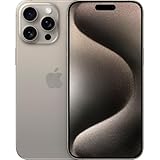










iPhone 17e Review – 6 Months Later
iPhone 17e review: Apple’s cheapest 2026 iPhone, tested for six months to see if the budget pick is actually worth it.
It’s the cheapest new iPhone you can buy, but what do you lose out on?
By Josh Teder
The iPhone 17e is positioned as the basic iPhone, built for people who just want an iPhone with no frills at a lower cost. If you’re looking at this phone, you’re probably upgrading from a really old iPhone. So after spending six months with the 17e, is it worth getting? Maybe. We’ll get into it.
Unlike Apple’s MacBook Neo, which has a similar value proposition in the Mac line, that laptop doesn’t feel nearly as compromised as the 17e does. This is one of my least favorite phones I’ve used in recent years.
Performance and Everyday Speed
A Phone That Feels Slow
For a brand new phone in 2026, this thing just feels slow. In iOS, there are animations everywhere, and even though the 17e has a modern A19 chip, swiping through home screen pages and scrolling websites feels slower than it does on other modern Apple phones and Android devices with higher refresh rates.
If you’ve always had a phone with a 60Hz refresh rate, like an iPhone 11, 12, or a previous iPhone SE, this phone won’t feel that different to you. It’s only if you’ve experienced a Pro iPhone or an Android phone with a faster refresh rate that the slowdown becomes obvious.
Wi-Fi That’s Already Behind
Another thing adding to the feeling of sluggishness is Wi-Fi. This phone only supports Wi-Fi 6. The consumer this phone is targeting probably doesn’t even know what Wi-Fi version their network is, so why does this matter? Because you’re buying a brand new phone in 2026 whose Wi-Fi is already two generations behind.
If you’re buying this phone to run it into the ground over the next five years, it should at least have Wi-Fi 6E, which is notably faster than Wi-Fi 6. It’s a difference you can actually see on a 6E network, and it affects everything from downloading apps to loading websites. That difference can sometimes be really noticeably slower.
The Missing Ultra Wideband Chip
The other big miss on this iPhone, one that makes it almost unusable for me, is that there’s no Ultra Wideband chip. This is the chip that powers Precision Finding for AirPods and AirTags, giving you precise directions and distance to your things. With the 17e, you just don’t get that, which makes it way harder to actually find your lost stuff.
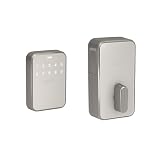
The second thing Ultra Wideband matters for in 2026 and beyond is unlocking doors. There are smart locks you can buy today, like the Aqara U400 that I’ve reviewed, or the Schlage Sense Pro I’m currently reviewing (you can catch that review on the 6 Months Later YouTube channel once it’s out), that use the Ultra Wideband chip in your phone to automatically unlock as soon as you get to the door. It’s the best smart lock experience I’ve had.
Between that and the same tech being used to unlock newer car doors from brands like BMW, Tesla, Rivian, and Hyundai, this is a feature I really wish this phone had.
“This is one of my least favorite phones I’ve used in recent years.”
Screen Brightness and the Notch
Brightness Falls Short in Direct Sunlight
Another smaller downside is screen brightness. If you’re coming from an iPhone 11, 12, or an older SE, the 800 nits of max brightness and 1,200 nits of peak HDR brightness are still an improvement. But you may still run into trouble in direct sunlight, especially compared to phones like the iPhone 17 or iPhone Air, which peak at around 3,000 nits.

| Spec | iPhone 17e | iPhone 17 / iPhone Air |
|---|---|---|
| Max brightness | 800 nits | 3,000 nits |
| Peak HDR brightness | 1,200 nits | 3,000 nits |
| Minimum brightness | Can’t dim down the way the Air and 17 can | Dims to 1 nit |
The 17e also can’t dim down to one nit of brightness like the Air and 17 can, which is really nice for looking at the phone at night. In lower brightness situations, you’ll also notice unevenness with the LCD panel, almost a kind of ghosting or color artifacting effect.
The Notch Steals Screen Space
Another downside is the notch. It’s slightly annoying because many parts of iOS 27 were clearly built with Apple’s Dynamic Island in mind, but here, all of those elements just get pushed farther down onto the screen. It ends up feeling like you have a little less screen real estate than you do on a phone with a Dynamic Island.

Camera and RAM Compromises
The other main feature missing that a lot of people would like is the 18-megapixel Center Stage camera Apple introduced with last year’s iPhones. The 17e only has the previous-gen 12-megapixel selfie camera, so it can’t automatically zoom out when you’re taking a group selfie the way Center Stage does. It’s a feature you don’t really think about until you’re in a group selfie and it just triggers automatically. If you take a lot of selfies with family and friends, that’s another reason to go for the iPhone 17 Pro Max instead.
The last big miss involves RAM. It only has 8GB, which even in 2026 isn’t enough to power some of the newer Siri AI features, like the expressive voice and more powerful speech dictation I talked about in my Android vs. iOS comparison. If this iPhone already can’t run some of Apple’s advanced on-device models today with the RAM it has, it’s not likely to get future features that also need those models, which could make this phone feel outdated more quickly.
What I Like About the iPhone 17e
Those are the downsides. Is there anything I’ve liked about this phone? Yes.
Durable Ceramic Shield 2
Having Ceramic Shield 2 here, the same glass found on the 17 Pro Max and iPhone Air, is great. I found this glass holds up really well to abrasions and micro scratches in particular, so much so that these are the first iPhones in years I haven’t put a screen protector on. Doing that would also negate the better anti-reflective coating that comes with Ceramic Shield.
Size, Weight, and MagSafe
The speakers are decent, especially compared to the Air. I overall like the size and weight. It doesn’t feel too heavy like the Pro Max and even the Pro sometimes can. It’s about 40g lighter than the 211g 18 Pro I have, and only 4g heavier than my iPhone Air. That said, I find the smaller keyboard somewhat more annoying to type on than on my Air or the Pro Max.
Another win for the 17e is that this is the first e-series iPhone to come with MagSafe, so all of the MagSafe accessories out there, plus an increasing number of built-in car chargers, will work with this phone.
Battery Life
Battery life has also been pretty good for me. It’s lasted me all day, and I’ll typically end the day somewhere around 50%. On a day with really heavy use, when I was sick, it still lasted me all day, but I used about 89% of the battery capacity. So it was almost not enough for a day of really heavy usage, just keep that in mind.
Its battery life is definitely better than my iPhone Airs, but so far hasn’t been as good as the 18 Pro, a similarly sized phone I’ve been testing. As always, your results will vary depending on what you use your phone for, especially for gaming or if you’re mostly using cellular versus Wi-Fi.
Photo and Video Quality
Photos Lack Stabilization
If you’re coming from a really old iPhone, the photos you get out of here will seem like an upgrade. But compared to other modern iPhones, even the single-camera iPhone Air, the 17e camera won’t be as good. This is mainly due to the missing sensor-shift optical image stabilization, which helps reduce blur, especially in low light. I ran into this repeatedly trying to get a picture of our family cat, and it’ll likely happen with photos of kids too. Like a lot of iPhones, this one also tends to eliminate a lot of shadows, which can make photos look brighter but reduce the moodiness and drama shadows can give some shots.

48MP Mode and Video Quality
An upgrade you do get, if you’re coming from an older iPhone, is the 48-megapixel mode, which lets you take larger photos and crop them after the fact without losing a ton of resolution. Video quality is the great iPhone video quality the company has been producing for years, and depending on how old your current iPhone is, the 4K 60 mode here might also be an upgrade, producing higher-resolution, smoother footage.
Durability and Charging
The last thing I’ve really liked about the 17e is that, like other modern Apple smartphones, it carries an IP68 rating, meaning it’s rated to survive immersion at a maximum depth of up to 6 meters for up to 30 minutes. If you drop it in water, pick it up, dry it off, and you should be good to go. If you drop it in salt water, rinse it in fresh water first, then dry it off.
It’s also fast-charging capable, reaching 50% in 30 minutes with a 20-watt or higher adapter. That’s not the fastest charging speed we’ve seen on an iPhone, but it’s still an improvement if you’re coming from an older model.
Should You Buy the iPhone 17e?
So do I recommend the iPhone 17e? Yes and no. Tech is way too expensive right now, especially with the AI-fueled price pressure being forced on all of us. If you want a new iPhone in 2026 and want to spend the least amount of money possible, the 17e is your only option.
“For what you get, that seems like kind of a high price. Frankly, I honestly would spend that money differently.”
If you can swing it, I’d buy something like a refurbished iPhone 17 instead. It has the better refresh rate, the Ultra Wideband chip, the Center Stage selfie camera, and a better wide camera plus an ultra-wide camera, which unlocks macro photography, great for anyone who likes taking close-up photos of flowers or other small things.
If you can’t swing that, here’s where I’d look instead:
| Phone | Price | Why Consider It |
|---|---|---|
| Refurbished iPhone 17 | Check current price | Better refresh rate, Ultra Wideband chip, Center Stage selfie camera, plus a wide and ultra-wide camera with macro photography |
| Refurbished iPhone 15 Pro | $600 | A solid, cheaper Apple refurb option |
| Pixel 10a | $424 | 120Hz refresh rate, better Wi-Fi chip, brighter display, ultra-wide camera; worse glass reflectivity and internal chip |
| Fairphone 6 Plus | $650 | User-replaceable battery, display, and USB-C port, all with just a screwdriver |
Around $600, I’d look at refurbished phones like the iPhone 15 Pro Max. If you’re not tied to getting an iPhone at all, that’s where I’d point you toward the Pixel 10a, currently on sale here in the US for around $424. It’ll feel way faster than the 17e, with its 120Hz refresh rate, better Wi-Fi chip, brighter display, and ultra-wide camera, though it does have worse glass reflectivity and internal chip performance. Android phones in general will typically have better hardware features for less money.

Another option is the Fairphone 6 Plus, which just came to the US via their website and Amazon for $650. It has a user-replaceable design where you can swap the battery, display, USB-C port, and more, all with just a screwdriver. I’ll have a full review of that phone on the 6 Months Later YouTube channel soon.

So, those are all of my thoughts on the iPhone 17e. To see more of my other iPhone reviews, check out my iPhone Air and 17 Pro Max posts, or browse more Apple reviews like the MacBook Neo, AirPods Pro 3, and iPad Air.