Your phone has more advantages than you might think.
By Josh Teder
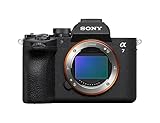
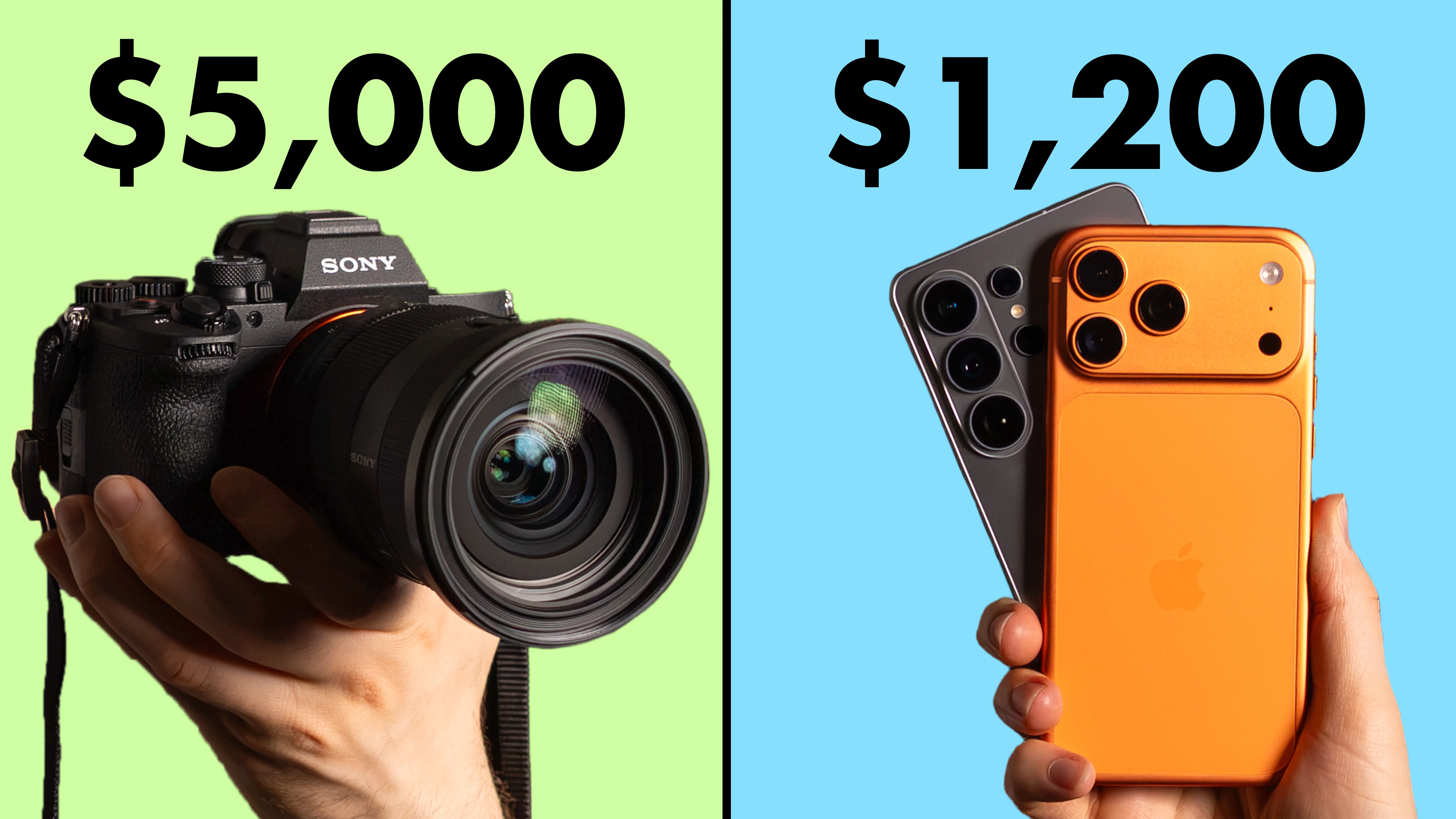
Smartphone makers have been telling us for years that a phone with multiple lenses is basically the same as carrying around a bag of giant, expensive lenses. So I spent well over six months with a $5,000 Sony A7 V (plus lens) shooting side by side with my iPhone and Android phones to see if that’s actually true. I can’t believe I’m saying this, but your phone has a lot more going for it than you might think.
Where Your Phone Actually Has the Edge
First, your phone is more portable, and that matters a lot. You can take advantage of quick situations, like when a pet or kid does something unprompted right in front of you. A dedicated camera is usually sitting away from you in a camera bag, and that’s how you miss moments like that.
Your phone is also water- and dust-resistant in a way most dedicated cameras aren’t. Your phone’s telephoto camera isn’t going to get sand stuck in its focus ring the way a physical zoom lens can, and being waterproof means you can put your phone in situations where it might get splashed without a second thought.
Then there’s Find My support on iPhone and Find Hub on Android, both built right into modern phones, so you can track or remotely disable your device if it’s lost or stolen. With a camera, even one that connects to Bluetooth and Wi-Fi, unless you’ve rigged up a secret AirTag inside it, that’s $5,000 gone for good.
And the last big advantage: you already own a phone, so it’s not an extra device you have to buy, and there’s just not as steep a learning curve taking photos on your phone as there is with a dedicated camera. My Sony A7 V has so many different settings that it’s impossible to remember what every feature does. Six months in, I was using the electronic shutter and only just realized that mode disables the setting that helps reduce noise, which is why I’d been getting noisy low-light shots. Ugh.
Why a $5,000 Camera Still Usually Wins on Image Quality
So with all those advantages, what about image quality? This is the one place you’d expect a $5,000 camera to have a clear edge, and it usually does, though not always, since you often can’t tell which photo came from which device at a glance. It comes down to two things: sensor size and lenses.
A dedicated camera like the Sony A7 V just has more physical room for a larger image sensor than any phone does, kind of the same principle as Christopher Nolan’s The Odyssey being shot entirely on 65mm IMAX film instead of standard 35mm. The larger format lets in more light and captures more detail and clarity, and that same idea applies when you compare a dedicated camera’s image sensor to the much smaller one that has to fit behind a smartphone lens. More light also means a shallower depth of field, which gives you better bokeh, that background blur that makes a shot look professional. Phones do have some of this blur now, and portrait mode tries to fake the rest, but it’s hard for a phone to produce great bokeh given that smaller sensor and the constraints of its lenses.
That’s the second big advantage: with a dedicated camera, you can swap lenses depending on what you’re shooting, an 85mm portrait lens for portraits, a zoom lens so you can go wide one minute and telephoto the next without losing resolution the way you do pinching and zooming on a phone, or a dedicated macro lens for close-ups. The optical quality of these lenses typically outperforms a phone simply because they’re not space-constrained the same way. The tradeoff is that swapping lenses can introduce dust onto your sensor, which shows up in photos, so you usually need a blower to clear any dust off the lens before mounting it. That happened to me on my Iceland trip, and it was a real pain removing dust spots from every photo I wanted to keep.
Computational Photography: The Double-Edged Sword
Another big benefit a $5,000 camera has over your phone is actually the absence of computational photography. Your phone does a lot of processing in the background to try to get you the best possible shot, and it’s not always great at it. If you’ve ever looked at a photo your phone took and thought it looked oversharp or artificial, or wondered where all the shadows went, that’s computational photography at work.
A camera like the A7 V, in auto mode, still makes decisions for you like ISO, shutter speed, white balance, and aperture. But that’s typically where it stops. Your phone goes way further, making calls on saturation and clarity and doing subject detection that’ll make flowers look more saturated than the rest of the image or the sky look bluer than it actually was. A dedicated camera is just going to try to capture what the scene actually looked like and let you make those artistic decisions later when you edit.
Your camera roll is also ready to go the moment you take the photo, while a dedicated camera usually needs some manual transferring, even with auto-download to your phone set up. I’d actually argue that friction is a good thing. For important trips and family events, I really enjoy getting to go back and rediscover what I shot instead of just dumping everything into Google Photos or Apple Photos. That friction brings you back to taking photos for yourself, for your own enjoyment, which is kind of how photography used to work before social media.
Handling, Ergonomics, and Overheating
A bigger body isn’t only a downside. For long shooting sessions, I actually prefer the ergonomics of something like the A7 V, even though it weighs more. I like where the shutter button sits, being able to use the dials on the lens, and it’s easier to grip than a phone. Most modern cameras also have a flip-out screen, which makes vlogging and awkward high- or low-angle shots way easier than on a phone, and a viewfinder makes composing a shot in direct sunlight much easier than fighting glare and dim brightness on a phone screen.
There’s a physicality to shooting on a real camera that’s just missing when you take photos on a phone. Even a phone built for interchangeable lenses, like some of the new ones coming out of China, doesn’t look nearly as comfortable to hold. Once you start adding rigs and extra lenses on top of a phone, I think most people are honestly better off just getting an actual camera.
Overheating is another area where dedicated cameras usually have the edge. Some are built with active cooling and fans specifically so they can shoot continuously in conditions where your phone would throttle or shut down entirely.
You Don’t Have to Spend $5,000
So maybe this has convinced you a dedicated camera is worth it, but $5,000 is a lot to spend, and it’s not going to make sense for everybody. Thankfully there are more affordable ways in.
The Fujifilm X100VI, TikTok’s favorite camera, doesn’t have interchangeable lenses, but it’s genuinely portable for a dedicated camera, has an APS-C sensor, looks great, and has all those tactile dials and buttons, including one that can mimic the look of film. If you want interchangeable lenses for less, the Sony ZV-E10 II is a solid step down. Or if you want something closer in spirit to my A7 V, the Sony a6700 also has an APS-C sensor and shares some of the same AI and autofocus features as the A7 line.
When you hear APS-C, that refers to the image sensor. It’s smaller than a full-frame sensor like the one in my A7 V, which is why full-frame cameras are typically better in low light, have better clarity, and produce a shallower depth of field, but they’re also more expensive.
Sony’s been best in class on video autofocus for years, which is why I ended up with so many of their cameras, but that’s not to say I only recommend Sony. Nikon, Canon, Fujifilm, and others make great dedicated cameras worth checking out too. And buying refurbished or used is another solid way to get into a dedicated camera for less.
So, Does Your Phone Actually Compete?
Your phone has way more advantages over a $5,000 camera than you probably expected. But especially once depth of field enters the picture, a dedicated camera usually still wins out. If you want to take your phone photography and videography further, it’s still absolutely worth getting a dedicated camera, even a cheaper one. Not just because it’s often a nicer device to shoot on and the quality is better, but because the learning curve forces you to learn the fundamentals, which will make you better at shooting on your phone too. That said, it’s not going to make sense for everybody to spend $5,000 on a camera plus lens.