Transcript
by Josh Teder
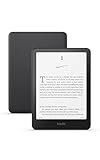
The 2024 Kindle Paperwhite is the follow-up to one of my best review devices, the 2021 Kindle Paperwhite, but did Amazon do enough with the latest version to justify upgrading to it? Is going with a Kindle still a good idea compared to the competition, and should you go with a Paperwhite or regular Kindle or Kindle Coloroft?
Performance Improvements
The first highlight of this Kindle is the new processor. This helps you get faster page turns, faster OS navigation, typing on the Kindle is faster, and the keyboard is more responsive. It’s just easier to move around the Kindle compared to the previous versions, and it’s noticeable—almost a second faster than my 2021 model in many instances. After 6 months, I still notice the speed difference when switching back to my older Paperwhite and even the newer Kindle Scribe, which unfortunately did not get the same speed bump. And if you want to see my upcoming review of the Kindle Scribe, make sure you’re subscribed to the channel.
“After 6 months, I still notice the speed difference when switching back to my older Paperwhite and even the newer Kindle Scribe.”
The Kindle Experience
The second major highlight is the overall Kindle experience itself, which is something I’ve really come to appreciate in my daily use. The Kindle offers a distraction-free OS. There are no apps, no notifications; it’s just books and articles that you send to your Kindle. That’s it. I found myself using this Kindle every single day for over the past 6 months, primarily for reading books and articles I’ve sent to it, and even though reading news on it could be better, I find the actual experience of reading anything on a Kindle’s display to just be more enjoyable compared to reading on a phone.
“The Kindle offers a distraction-free OS. There are no apps, no notifications; it’s just books and articles that you send to your Kindle.”
Buying ebooks for it is easy, and you can do it right from the device itself. Buy a book from a book sample, and it’ll bring you right back to where you were in that sample, which is awesome. Samples are an underrated feature of ebook readers in my mind. They allow you to start reading a book without purchasing it, like what you would do in a bookstore, except with an e-reader you can do it from the comfort of your own home.
Useful Reading Features
Another feature I found myself using a lot is X-ray. X-ray helps you figure out what characters are what, what they’ve done in the past, but it won’t spoil something about a character that you haven’t encountered yet in a book. Another feature I love is the integration with Wikipedia, the dictionary, and other references that come up when you highlight a word. This is great for stories written before modern times and allows you to understand the context of the way a word has been used, thanks to not only the dictionary integration but also Wikipedia.
Text highlighting is another standout feature. Being able to highlight and later see everything you highlighted or took notes on, either on the Kindle itself or in the Kindle app on various devices, is incredibly useful. You can easily search highlights in a book as well.
Household sharing is another nice touch. Kindle makes it easy to share books that you’ve purchased with friends and family in your Amazon household. Setup is incredibly simple if you’re already an Amazon customer and have Wi-Fi passwords saved. It’ll automatically connect your account and Wi-Fi. Now, for some reason, this didn’t happen with my particular Paperwhite, but it did with my new Kindle Scribe. As long as your Amazon account is linked to the device when purchasing, it should work.
Hardware and Display
Next, let’s talk about the device form factor itself. The form factor makes it easier to hold in your hand than a lot of books, especially if they’re hardcover. You can more easily prop your Kindle on a pillow than a book. The display quality is excellent. It looks like black text on a white page thanks to the actual pigments used in e-ink technology. Another thing that makes this display great to read on is it’s flicker-free, unlike most smartphones, iPads, and other tablets. Or at least if there is any flickering from its LED front light, my camera wasn’t able to pick it up.
“The display quality is excellent. It looks like black text on a white page thanks to the actual pigments used in e-ink technology.”

The integrated front light actually uses a light guide to shine a light down onto the display. Now, this is different than a traditional backlight display where the backlight is placed behind the display and emits light through the display at you. It makes it so you don’t need a reading light; you just get this nice subtle glow from the device. There’s also an adjustable warm light, so the device won’t keep you up at night, though it’s not as warm as some other devices out there like my DC1 from Daylight. It’s much more candlelight in its color.
Storage and Battery Life
The other benefit you get with a Kindle is on this device you can hold your entire bookshelf—heck, thousands of books. So how much storage do you need? Very little, actually. The Signature Edition I have is 32 GB, and that is complete overkill for my needs. My previous Paperwhite had 8 GB of storage, and I didn’t even end up filling one GB with the articles and 20 to 30 books I sent to it. I really wouldn’t worry too much about the storage unless you’ve downloaded like a ton of PDFs, audiobooks, and personal docs to it. That stuff will take up more storage than just regular ebook files.
The new wireless charging dock is another nice addition. It’s perfect for displaying your Kindle next to your bed or on your desk, and if you paid to get rid of ads, it’ll display the cover of the book you’re currently reading. If you don’t buy the wireless charging stand for your Signature Edition Kindle Paperwhite, the battery life is still superb. It’s easily lasted me two to three months on a single charge. Standby battery is also excellent. You cannot touch a Kindle for months, open it back up, and boom, it’ll still have battery.
“The battery life is still superb. It’s easily lasted me two to three months on a single charge.”
Changes from Previous Model
Next, let’s talk about some notable changes to this model versus the previous one. The display size has increased to 7 in from 6.8 in, and it has more rounded corners to match the rounded corners of the device itself. Can it fit in the old cases? No, it’s slightly too wide to fit. Is it heavier? Not really. The old generation was 207 g; this new one weighs 212 g. You’re not really going to notice that tiny amount of a weight increase.
Downsides
Next, let’s talk downsides. First, you can’t write notes on it like you can a normal book. You can highlight with your finger and type notes, but there’s no pen support like with the Kindle Scribe. A really small nitpick was there wasn’t plastic-free packaging for the wireless charger, which Amazon didn’t make themselves. They did partner with Anker to make it, but still, like guys, what are we doing here?
Another downside is you can’t purchase books directly from the Kindle or Amazon app because of Apple and Google’s app store fees. Now, this might be different in some other countries that have stricter antitrust laws, but that’s not the case here, at least in the US.
Another downside is it’s not easy to make the UI’s text larger. If you give a Kindle to somebody who has trouble seeing fine print, well, you can scale the book text itself. What use is that if you can’t properly size the Kindle’s OS to somewhat match it?
Amazon’s Ecosystem Considerations
So do I recommend getting a Kindle Paperwhite? Yes, with some caveats. I’d only recommend it if you want to completely stay in Amazon’s ecosystem, but if you want a great e-reader that can read things outside of that ecosystem, or you want to be able to take your ebooks from Amazon to another e-reader, I don’t think it’s a good option for that. That’s because of ebook digital rights management, or DRM, software. Amazon’s file format makes it practically impossible to legally move your ebooks to another non-Amazon device, and they recently closed a loophole that made it easier for people to try and strip the DRM from the Kindle ebook files by being able to download older and more crackable versions of those files directly to their computer.
“Amazon’s file format makes it practically impossible to legally move your ebooks to another non-Amazon device.”
I get that there needs to be a way to make it harder for people to just copy an ebook file and distribute it to others who didn’t pay for it. That’s totally reasonable, but at the same time, if I purchase a license to an ebook from Amazon, Kobo, or another ebook store, there should be a way for me to transfer that license from one e-reader to another one I own, and Kobo’s approach seems much more in line with this type of thinking than Amazon’s. Their approach is much more, “Hey, we made an e-reader. You could buy stuff from our store, but if you want to bring your own stuff too, that’s cool.” Amazon’s approach is much more expectation that you will only buy from their store and then just send articles to your Kindle.
Which Kindle Should You Choose?
So if you want more features than what Amazon currently offers, that’s probably the route you should go, but if you’re fine staying in Amazon’s ecosystem, I think the new Kindle Paperwhite is a fantastic choice. But why buy a Paperwhite specifically versus the regular Kindle or a Kindle Coloroft? You should go with a Paperwhite if you don’t need or care about a color display, and you don’t want to pay more for one, and you don’t want to deal with potential display issues that I talked about in my video on the Coloroft, which I’ll leave a link to in our blog post as well as in the description. You should also choose the Paperwhite if you want a larger display than a regular Kindle, longer battery life (the Paperwhite is rated for 12 weeks versus the regular Kindle’s 6), and you want one with a warm light. You can easily see all of the prices for these various Kindle configurations in our blog post or check out the comparison page on Amazon’s website, which I’ve linked to in our blog post.
“The Paperwhite is rated for 12 weeks versus the regular Kindle’s 6.”
Final Thoughts
Overall, has upgrading to the Kindle Paperwhite been worth it for me? Yes. The speed increase is noticeable and is something I really like having. Is the Signature Edition with wireless charging necessary? No. However, I do really like the auto-adjusting front light. I’ve barely manually adjusted the front light in the 6 months I’ve had the thing. That feature alone, for me at least, has made the Signature Edition Paperwhite worth having, and regardless of which Kindle you get, I do think the version without any ads on the lock screen is worth it.
So that’s the Kindle Paperwhite. It’s probably the best non-color e-reader you can get for Amazon’s ebook ecosystem and one I’ve thoroughly enjoyed having, lasting me months on a single charge. I find I use mine every single day and, yes, still maintain that it’s better than a physical book, but if you disagree, let me know in the comments, and if you have a Kindle, what do you think of them?
“It’s probably the best non-color e-reader you can get for Amazon’s ebook ecosystem and one I’ve thoroughly enjoyed having, lasting me months on a single charge.”
The Kindle Paperwhite starts at $159, and you can get the Signature Edition for $199, but both do go on sale at various times throughout the year, and you can check their current price via our blog post. You can also save 20% on your new device by trading in your old Kindle via Amazon. If you want to see more of my videos on e-readers and note-taking devices, you can click here to see those and make sure you’re subscribed to the channel for my upcoming reviews on the newest Kindle Scribe, the Remarkable 2, Remarkable Paper Pro, and the Daylight DC1. For 6 months later, I’m Josh Teder. Thanks for watching.
Featured Products
If you buy something from a link, 6 Months Later may earn a commission. See our ethics policy.