Transcript
by Josh Teder
It’s been 6 months since I bought these Sonos Ace headphones, and while they have a lot going for them with their excellent sound quality and build, do they have enough differentiation from their competition to make them worth buying? After spending 6 months using them, I think I know the answer.
Sound Quality & Features
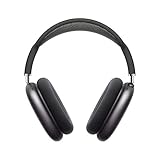
Let’s start with highlights, and first is sound quality. These headphones really deliver in that area. You get excellent detail and great separation between tracks. The sound can be a bit punchy at times; it has a bit of warmth to it that I really enjoy. In my testing, they’re pretty comparable to the AirPods Max in terms of overall quality, though their sound signatures do differ quite a bit—something I’ll cover more in my comparison between those two headphones.
The Ace does have one leg up over the AirPods Max, though, and that’s that they have an EQ which you can adjust in the Sonos app. They support Dolby Atmos for spatial audio in Apple Music, and the Bluetooth range is solid. I can walk a room or two away from my audio source with no dropouts or issues.
Lossless Audio Support
Now about that lossless audio that you’ve likely seen marketed with these headphones—there is a catch with that. The Ace supports lossless audio over a wired USB-C connection as well as over Bluetooth, but only when connected to Android devices with Qualcomm Snapdragon Sound aptX. Not all Android devices have this, though; some just have aptX HD, which is higher quality than standard Bluetooth streaming but isn’t the same as aptX lossless. Now, can you notice a difference when this feature is enabled? Surprisingly, yes—I can notice a difference listening to the same non-Atmos tracks with this feature enabled. If you’re on iOS, you’re out of luck with lossless audio.
Comfort and Build Quality
The second major highlight is comfort and fit. At 312g, these are really comfortable for long listening sessions. The build quality feels premium, with a telescoping stainless steel rod design similar to the AirPods Max for easy adjustments that stay put. Though annoyingly, when you try to fit them back into their case and zip it up, you have to readjust the headphones to fit into the case. While the construction is mostly plastic, that’s not necessarily a bad thing because it helps keep the weight down. The ear cups use fake leather, and in another nod to Apple’s design, they’re magnetic and removable—a great choice for both comfort and maintenance. Though I do wish that Sonos also borrowed from Apple this knit material on their ear cups; it’s just more breathable than the material that Sonos went with.
Design and Controls
Overall, I really like the Sonos Ace’s design. The ear cups are deep enough that my ears don’t hit any of the mesh fabric covering the drivers like they do with Sony’s WH-1000XM5s, which I’ve reviewed. Sonos overall got the controls pretty right with these headphones. You use what’s called the Content Key to control playback: slide the Content Key up and down to adjust volume, and then push it down once to play/pause, double press it to skip forward, triple press it to skip back.
The aesthetics, I also think they got right. They stick out a bit less than Sony’s cans, and I really like how intuitive the contrasting colors on the inside of the ear cups are for knowing the right from left side.
Accessories and Connectivity
The earbuds case also includes this little pouch that not only has a USB-C cable for plugging it into your phone or a power source for lossless wired playback or charging but also a USB-C to 3.5mm cable—perfect for connecting it to in-flight entertainment on a plane.
They’ll also automatically resume media when you put them back on—that’s a feature that not all headphones have and something I’ve really enjoyed. Related to switching media, they also support seamless switching with Bluetooth multi-point.
Battery Life
Battery life is another strong point with these headphones. They’re rated for 30 hours with Active Noise Cancellation on, which has lined up with my experience. They last for a good long while, and like other headphones, they support rapid charging—you get up to 3 hours of playback in just 3 minutes of charging. They’ll automatically shut off after 30 minutes of inactivity to preserve battery, though you’ll need to remember to press the power button to turn them back on.
Sonos Integration
One of the headline features of the Ace is its ability to connect to Sonos soundbars, which is one of the most unique parts of the Ace’s design. Any audio playing through your soundbar can be beamed over to the Ace with their Audio Swap feature. This works with the Arc, Arc Ultra, both generations of the Beam, and the Sonos Ray, but I do think it is worth asking if that feature specifically is worth choosing these headphones over their competition, especially if you’ve invested in a different ecosystem like Apple’s with an Apple TV.
It might not be, and then of course if you don’t have a Sonos soundbar yet like me, it’s going to matter even less. I’m a Sonos customer and have many of their speakers, but I don’t actually have a soundbar. I can’t say how well the Audio Swap feature has worked because it only works with their soundbars—it does not work with their speakers.
App and Additional Features
So what features have I not found myself using with the Sonos Ace? First is the Sonos app. While the Sonos app has some nice features like EQ controls and head tracking for spatial audio, I really only use it for initial setup. You don’t really use it to play audio to the headphones like you can do with Sonos speakers.
The head tracking, while cool with spatial audio where you’re trying to create like a virtual sounding theater when you’re watching something on your TV with Dolby Atmos, feels a bit gimmicky for anything else in my experience—and that’s true for all devices that have it, not just the Sonos Ace.
Transparency Mode
So how good is the transparency mode on the Sonos Ace? It is one of the better transparency modes I’ve heard—like the mics they’re using are actually pretty good, they sound clear with good detail. Can I still tell I’m wearing headphones though? Yes, so it’s not like the same level as the AirPods Max.
Microphone Quality
Now what about mic quality? All right, and these are the Sonos Ace. This is how their mics sound. Again, I’m in my studio environment here, so this is like a best-case scenario for how these mics are going to sound when you’re on a work Zoom call or you’re on the phone with somebody, and I’m just recording this straight to my Mac via QuickTime and then using my iPhone as a camera. Overall, the mics on these sound pretty decent—they’re clear, though my voice sounds maybe a bit more muffled than I like. Definitely let me know how you think they sound in the comments.
Downsides and Issues
Now let’s talk about the downsides with these headphones, and there are quite a few I’ve run into while using them over the past 6 months. First up are the control sounds—the noise you hear when you turn up and down the volume or just play or pause media. It just sounds a bit too loud, and it’s kind of distracting from what you’re listening to. There really should be a way to reduce the volume of the controls within the Sonos app settings for the headphones.
Volume Control Problems
Low volume listening is another issue on devices like iPhones, Android devices, and Macs—I’ve tried them all—but once you hit around 20% volume, the headphones won’t actually go any lower. This makes them absolutely unusable if you want to have the noise cancellation on, which you just do by hitting the noise cancellation button on the right ear cup. If you want to block out all the noise around you but have your music be pretty quiet, you just can’t do that with the Sonos Ace. Both the AirPods Max and Sony WH-1000XM5s can ramp their volume all the way down to zero in a gradual way; the Sonos Ace, for whatever reason, just cannot do this.
The noise cancellation has some quirks too. I’ve noticed they let in higher-pitched noises like clinking silverware, for example. So if you decide to wear these around the house to do chores and you are using the noise cancellation, just be aware that sound may leak in and not in ways that you expect.
Software and Integration Limitations
Software updates with the Sonos Ace are another pain that kind of highlight the difference between these being treated as a third-party accessory versus a device made by Apple or Google. They take forever with the Sonos Ace, have to be initiated through the Sonos app—it’s not like an automatic thing. You have to keep the Sonos app open on your phone the entire time, a far cry from the seamless update experience you get with platform-native headphones.
For iOS users, there’s not going to be parity with the auto-switch feature that’s featured on the AirPods Max. Yes, you can do Bluetooth multipoint so you can connect these to multiple Bluetooth devices at one time, but it’s only a limit of like two. The last major downside is the lack of built-in voice assistance—there’s no Google Assistant, Amazon Assistant, or even Sonos’s own voice control built in. You can hold the noise cancel button to trigger your phone’s assistant, however, but that’s about it.
Final Verdict
So do I recommend the Sonos Ace? That’s actually a trickier question than I was expecting going into this review because, look, these have got excellent sound, they’ve got good noise cancellation, excellent battery life, they’ve got the unique feature to be able to swap audio with the Sonos soundbar—which for Sonos soundbar owners is definitely a plus for going with these headphones. But then they’ve got some downsides, some of them very annoying, like the volume steps and low volume listening. That’s the one that I keep coming back to that drives me personally crazy.
Target Audience and Ecosystem Considerations
And then there’s the question that I keep coming back to with these headphones, which is: who exactly are these for? If you’re a Sonos customer, you’re likely an Apple customer as well because Sonos devices support AirPlay and not Google Cast. But by going with these, you’ll miss out on some of the great ecosystem features that the AirPods Max offer with your Apple devices, like the ability to watch TV and pair up to two pairs of AirPods to your Apple TV 4K at one time and seamless device switching between all of your Apple devices.
Even with that really cool unique soundbar integration with Audio Swap, I still think if you’re in the Apple ecosystem, it’s going to be hard to choose the Sonos Ace over the AirPods Max unless you have a gaming console hooked up to your soundbar as well and want to use these as a gaming headset really just to hear the audio. Ironically, I actually think the Sonos Ace are better for Android users with their support of lossless audio, but given the lack of Cast support with Sonos speakers—until Sonos supports it—I’m not sure I could recommend any Android user try and get into the Sonos ecosystem.
Final Recommendations
So do I recommend the Sonos Ace? Yes, but only for those who want to use the Audio Swap feature or love the Sonos sound signature and want that experience in a pair of headphones while also being able to deal with the downsides I mentioned, which are minor but somewhat annoying. Otherwise, I think if you’re an Apple user, you should probably look at the AirPods Max. For Android users, the lack of Cast support doesn’t really impact the headphone experience directly, but if you decide to get other Sonos products, that’s where using Android devices with Sonos can get annoying. Otherwise, with lossless over Bluetooth, I actually think these are a pretty great pair of headphones for Android users.
Price and Value
And price-wise, to me, the Sonos Ace, especially when found on sale, are competitively priced against their competition given the impressive sound quality and premium design. You can check their current price and comparison shop with the different retailer links in the Featured Products section below.
Featured Products
If you buy something from a link, 6 Months Later may earn a commission. See our ethics policy.